
Our work in numbers
We have actively participated in numerous scientific research and professional projects, contributing both as lead coordinators and project partners in collaboration with national and international institutions.
employees
18
Projects Completed
21
PROJECT Lead partner
4

09/2025-08/2030
Application of Virtual Reality in the Training and Education of Airline Pilots
2025
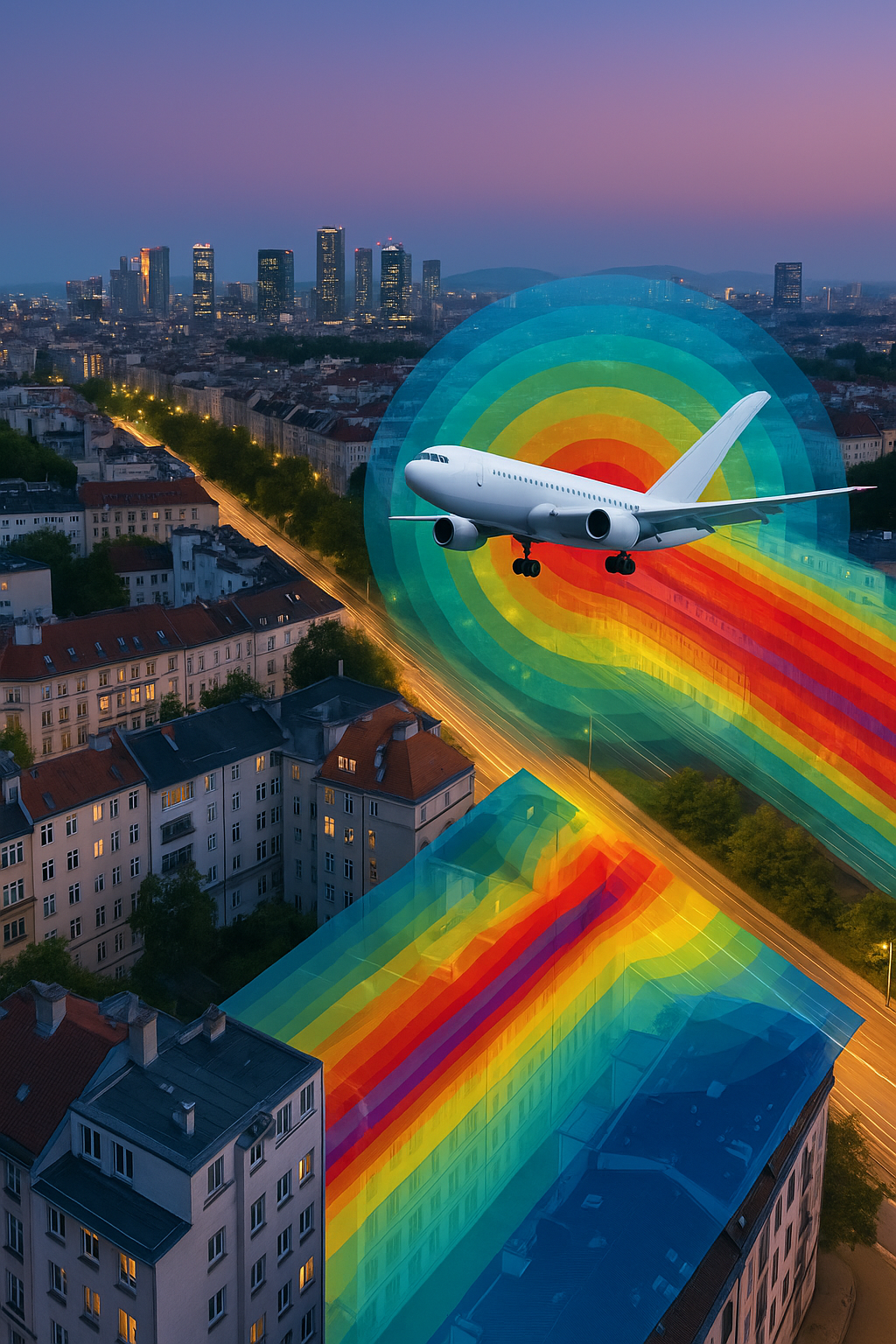
Artificial Intelligence Assisted Prediction of Urban Aircraft Noise -AeroSilent

06/2026– 06/2028
Human-AI Teaming Framework for Harmonized ATM Operations

06/2026-06/2028
Jumpstarting Air Navigation Services with Quantum Solutions

06/2024- 12/2026
Achieving human-machine collaboration with artificial situational awareness
The goal of the project is to enable human-machine collaboration by using an artificial situational awareness system which is enabling AI to anticipate and respond to human needs by understanding human intent and goals.
The project will develop and test an AI Assistant Application providing adaptable human-centric support to enhance air traffic controller’s (ATCO) performance and to reduce ATCO’s workload despite high task complexity.

06/2023- 12/2025
Flow Management Positions Platform for Probabilistic Demand and Capacity Balancing Under Adverse Weather
The purpose of the DCB-Met project is to improve decision-making processes among airspace users by providing access to additional information on demand–capacity balancing (DCB) and enhanced what-if analyses, while also integrating algorithms for resolving demand–capacity imbalances. DCB-Met builds on the previous FMP-Met project with a more advanced methodology, contributing to the creation of a platform for real-time application. The expected impact of the project is to improve ATM efficiency by enhancing decision-making in traffic flow management under adverse weather conditions, resulting in higher overall ATM performance and reduced delays.
07/2022 -06/2025
Strengthening Research and Innovation Excellence in Autonomous Aerial Systems
Horizon Europe CSA project coordinated by LARICS at the University of Zagreb Faculty of Electrical Engineering and Computing. Its focus is on advancing autonomous aerial systems for applications in smart agriculture, forestry, and logistics, while enhancing scientific excellence, innovation management, technology transfer, and citizen involvement through strong international cooperation.

08/2020 – 08/2023
AI Situational AwarAdaptive Modular Software-Defined Radio for Unmanned Aerial Vehicles (UAVs)eness Foundation for Advancing Automation
The purpose of the project is to test, under controlled conditions, the feasibility of precise triangulation of position by combining signals from stationary stations with data collected by mobile SDR stations mounted on an unmanned aerial vehicle (UAV), and to develop a concept for ensuring stable and secure communication between the drone and the control unit using a frequency-hopping algorithm.
06/2020 -11/2022
AI Situational Awareness Foundation for Advancing Automation
Adoption of higher levels of automation in air traffic management is slowed by concerns about out-of-the-loop effects, where controllers may lose situational awareness while automation cannot fully guarantee safety. The AISA project addresses this by introducing artificial situational awareness into en-route ATC, focusing on transparency and adaptability. It will develop strategies to provide controllers with the right information to build trust in automation and explore methods for systems to adapt to novel circumstances.

05/2020 – 10/2022
Development of an InnovativMeteorological uncertainty management for Flow Management Positionse Air Traffic Complexity Model
FMPMet is a Horizon 2020 SESAR project involving nine partners, including the Faculty of Transport and Traffic Sciences, University of Zagreb. It integrates meteorological forecast uncertainty into decision-making for Flow Management Positions, which manage sector capacity during unexpected events. The project provides probabilistic assessments of convective weather impacts up to eight hours ahead to improve Air Traffic Management efficiency and reduce delays. It includes six technical and two transversal work packages.

12/2019 – 06/2020
Development of an Innovative Air Traffic Complexity Model
The Existing air traffic complexity models based on subjective controller assessments lack consistency due to varying evaluations. The project aims to develop a mathematical model of air traffic complexity grounded in controller task data, with the goal of delivering an operational tool for the aviation industry. The research will define weighted contributions of individual or combined controller tasks to overall traffic complexity, supported by machine learning data collection, statistical analysis, and dissemination of results. The work continues from the Horizon 2020 – SESAR 2020 PJ09 project in partnership with Croatia Control Ltd.
12/2019 – 12/2022
Digital Network Management Services
The PJ.09 Digital Network Management Services project focuses on improving network traffic prediction for demand–capacity balancing, dynamic airspace configuration, integrated network management, and collaborative handling of network effects. It is structured into three SESAR solutions: Solution 44 assessed user acceptance and operational feasibility of dynamic airspace configurations; Solution 45 developed a multi-layer traffic prediction model for pre-tactical and tactical timeframes; and Solution 49 validated algorithms for predicting traffic performance degradation and the transition from local to regional capacity management measures.
01/2018 – 06/2018
Port optimisation and intermodality using a methodology that enhances Terminal Operating System (TOS) tools at container terminals and integrates all stakeholders involved in port logistics
Microsimulation applied to a container terminal; identification and weighting of criteria that affect TOS functionalities; validation of those criteria.
2001/2018 – 04/2021
Knowledge Alliance in Airt Transport
The main need identified of the project is to ensure the bridge between these 2 pathways because in many situations the lack of procedures for recognition of prior learning and/or gained experience makes the transition from vocational licensed occupations to academic ones difficult. In many cases, graduates need to attend new trainings with an important retake of learning outcomes.
12/2018 – 04/2019
Development of Advanced Arrival and Departure Procedures
Development of advanced departure and arrival procedures is part of a SESAR research project that addresses concepts, tools, and procedures aimed at increasing the capacity of Extended Terminal Manoeuvring Areas (Extended-TMA or E-TMA) to ensure the safe conduct of rapidly growing air traffic in line with environmentally sustainable standards.

09/2017 – 08/2020
Development of Common ATC Simulation Training Assessment Criteria Based on Future Pan-European Single-Sky Targets
The PJ.09 Digital Network Management Services project focuses on improving network traffic prediction for demand–capacity balancing, dynamic airspace configuration, integrated network management, and collaborative handling of network effects. It is structured into three SESAR solutions: Solution 44 assessed user acceptance and operational feasibility of dynamic airspace configurations; Solution 45 developed a multi-layer traffic prediction model for pre-tactical and tactical timeframes; and Solution 49 validated algorithms for predicting traffic performance degradation and the transition from local to regional capacity management measures.