
Flight Simulation Laboratory
Flight Simulation Laboratory was established by the Department of Aeronautics to enable scientific research and professional aircraft pilot training. The main function of the laboratory is to enable students (and other interested parties) to acquire specific skills related to:
• practicing the techniques of operating an aircraft
• practicing the techniques of operating an aircraft in emergency situations
• practicing the techniques of operating a multi-crew aircraft
• practicing routine and emergency instrument flight procedures
• analysing the effect of external factors on aircraft performance
• evaluating the cost-effectiveness of aircraft approach and departure procedures.
The main activities of the laboratory include:
• working with the students on gaining knowledge and skills related to:
– operating an aircraft
– guiding an aircraft
– controlling an aircraft
– aircraft flight planning.
• providing the following services to economic entities:
– certified education programs.
The laboratory is certified in accordance with the classification of flight simulation training devices. The certificate was issued in accordance with Commission Regulation (EU) 1178/2011 and therefore meets the qualification requirements set out in Part-ORA according to the FSTD specifications. In addition, the laboratory has a certificate of qualification for training devices that simulates flight for:
• FNPT II – Generic single-engine piston airplane (certificate HR.FSTD.06A)
• FNPT II – Generic multi-engine piston airplane (certificate HR.FSTD.06B)
• FNTP II – Generic multi-engine turboprop airplane (certificate HR.FSTD.06C
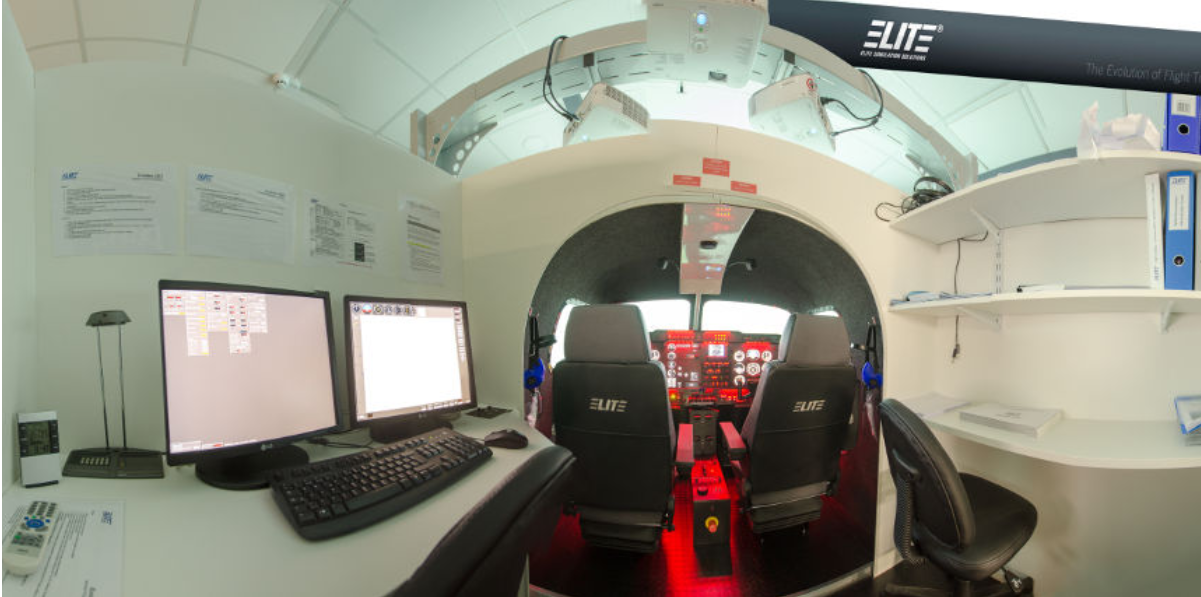
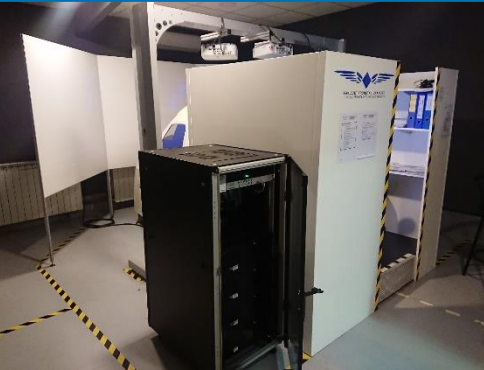
Evolution S923 flight simulator
Evolution S923 Synthetic Trainer is a flight simulation device. The device can simulate three types of aircraft Cessna 172, Piper Seneca PA-34, and Beechcraft King Air B200. The device consists of an aircraft cockpit layout with a full set of devices and controls for two pilots, flight control instructor stations with the ability to simulate failures and malfunctions of aircraft and equipment, changes in weather conditions, etc., and a visual system placed in front of the cockpit.
The device is used in flight preparation and execution procedures in the process of practical training of professional pilots at the Faculty of Transport Sciences and in other commercial programs. The device allows for the practice of approach, arrival, and en-route flight procedures in normal and emergency situations. The device is also used for demonstration exercises in professional subjects at the Department of Aeronautics, and for research related to aircraft exploitation and flight behaviour.